 |
|
 |
 |






 |
 |
 |
 |
 |
||
 |
 |
 |
 |
 |
 |
 |
 |
 |
 |
 |
 |
 |
|

|
||||||||||||||||||||||
|
|
|||||||||||||||||||||
|
|
|||||||||||||||||||||
|
|
|||||||||||||||||||||
|
||||||||||||||||||||||
 |
KUDZU GONE WILD - A Solution Becomes A Problem |
| (05/01/2021) |
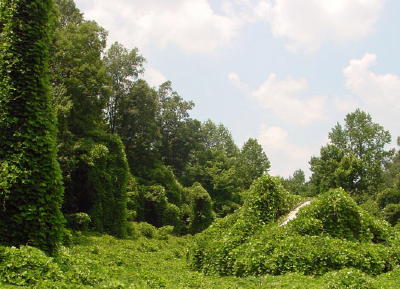 KUDZU UPDATE - I thought you might be interested to know that my grandfather brought a bunch of kudzu back with him after he served in the Philippines in WWII, He serving in both World Wars. It was supposed to be not only an excellent new erosion control ground cover, but also was reputed to be a good fodder for cattle. And it was supposed to grow vigorously and be hardy. So, he thought he would give it a try. Umm. Yes. Well. I saw you mentioned in the article where in the county there is a fine stand of kudzu. Right next door to my grandfather's house. He was Lewis Smith, who lived in the white house there in the bend of the river west of Big Bend. Everytime I drive by Kudzu, I think of my grandfather and his good intentions. - Natalie Smith KUDZU GONE WILD It came from the deep south, but it is spreading over much of the Mountain State. Like many growing things that appear to have purpose, Kudzu is now bringing complaints from residents from the southern coalfields to most parts of West Virginia. Calhoun's most prolific example of Kudzu is along the Rt. 5 road banks between Big Bend and the Annamoriah Bridge. Kudzu, an invasive plant, was introduced from Japan into the United States at the Japanese pavilion in the 1876 Centennial Exposition in Philadelphia, according to Smithsonian magazine. During the 1930s, the Soil Conservation Service grew more than 70 million kudzu seedlings in nurseries in an effort to battle dust storm erosion to southern farms. The service paid $8 an acre to anyone willing to plant the vine, according to the magazine. U.S. Forest Service reports that the plant occupies about 227,000 acres of forestland and is spreading at a rate of no more than 2,500 acres a year. The problem, once rooted, it can grow 60 feet a year. Kudzu has consumed some houses in the southern part of the state. It is a fact, killing kudzu is next to impossible, and even controlling it can be difficult.
|
|
|